
The Hidden Math Behind Everyday Buying Decisions
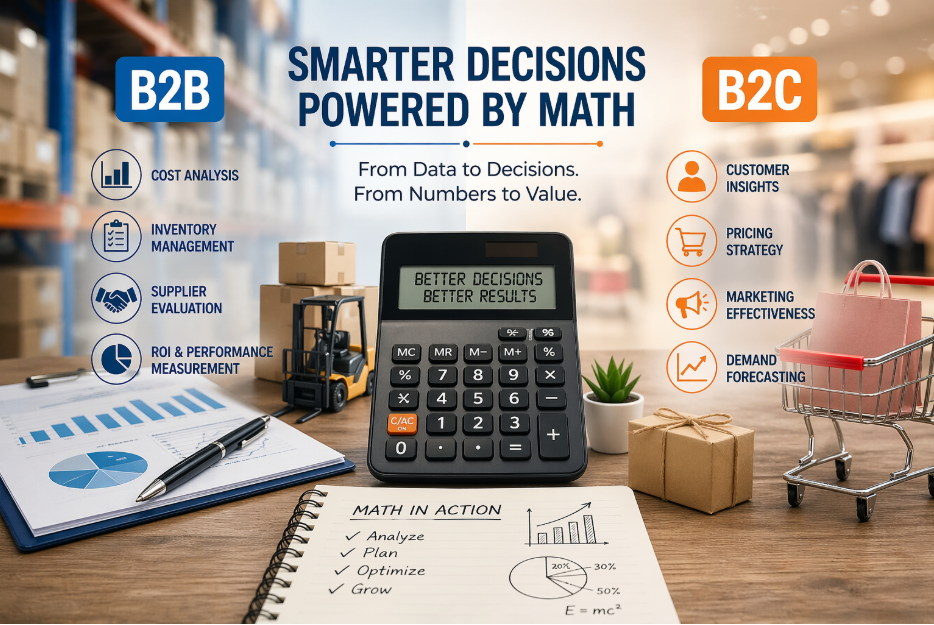
Most people don’t think about math when they’re making a purchase or running a business. It feels like decisions are based on instinct, experience, or even emotion. But look a little closer, and you’ll find that numbers are quietly guiding almost every choice whether you’re a company managing thousands of orders or a person deciding what to buy online.
In both B2B and B2C worlds, math isn’t just about formulas it’s about making smarter, more confident decisions.
Why Math Matters More Than We Realize
Think about the last time you compared prices, checked a discount, or tried to decide if something was “worth it.” That’s math in action.
Businesses do the same thing just on a larger scale. They rely on numbers to answer questions like:
- Are we making a profit?
- What should we charge?
- How much stock do we need?
- Is this campaign actually working?
The difference between success and failure often comes down to how well those numbers are understood and used.
Pricing: More Than Just Picking a Number
Pricing can feel like guesswork from the outside, but it’s actually one of the most calculated decisions a business makes.
Some companies use simple methods, like adding a profit margin on top of costs. Others rely on real-time data to adjust prices depending on demand, competition, or even the time of day.
From a customer’s perspective, this shows up as price changes, discounts, or “limited-time offers.” Behind the scenes, it’s all driven by calculations aimed at finding that sweet spot where customers feel they’re getting value, and businesses stay profitable.
How Data Turns Into Better Decisions
We hear a lot about “data” these days, but what does it really mean?
At its core, data is just information about what people buy, when they buy it, how often they return, and what they ignore. Math helps turn that raw information into something useful.
For example, businesses can group customers based on behavior:
- Some buy frequently
- Some only shop during sales
- Others are loyal to specific products
Understanding these patterns helps companies communicate better and offer what people actually want rather than guessing.
Getting Inventory Right (Without the Stress)
Running out of stock is frustrating. Having too much stock is expensive. Finding the balance? That’s where math comes in.
Businesses use calculations to decide:
- How much to order
- When to restock
- How to avoid waste
Even though customers rarely see this process, it directly affects their experience whether a product is available, how fast it ships, and sometimes even how much it costs.
Everyday Math in Consumer Choices
Even simple buying decisions involve a bit of mental math.
Take buying a trampoline for kids, for example. A parent might not sit down with a calculator, but they’re still weighing things like:
- Is the higher price worth the added safety?
- Will it last long enough to justify the cost?
- Does the size fit the available space?
That’s a real-world cost-versus-benefit analysis just done intuitively.
Business Buying Is a Different Game
In B2B settings, decisions are usually more structured and involve more people. It’s not just about the price, it’s about long-term value.
Companies often look beyond the initial cost and ask:
- What will this cost us over time?
- How much maintenance is required?
- Will this save us money in the long run?
This bigger-picture thinking helps avoid expensive mistakes and ensures smarter investments.
Smarter Logistics, Better Experiences
Have you ever wondered how products arrive so quickly or why shipping costs vary?
That’s logistics and it’s deeply rooted in math.
Businesses analyze routes, delivery times, and transportation costs to make everything as efficient as possible. For example, a company distributing pet accessories like a hundeleine might carefully plan shipping routes to reduce delays and expenses.
The result? Faster deliveries and smoother experiences for customers.
Measuring What Actually Works in Marketing
Marketing used to rely heavily on creativity and intuition. Today, it’s backed by numbers.
Businesses track things like:
- How many people clicked an ad
- How many actually made a purchase
- How much each customer costs to acquire
This helps them understand what’s working and what isn’t so they can adjust their strategies instead of wasting time and money.
Predicting What Comes Next
One of the most powerful uses of math is predicting the future or at least getting close to it.
By looking at past patterns, businesses can estimate:
- What products will sell best
- When demand will increase
- Which customers might stop buying
This kind of insight allows companies to prepare instead of react.
Promotions That Actually Make Sense
Not all discounts or promotions are random. In fact, most are carefully calculated.
Businesses analyze how much of a discount they can offer while still making a profit. They also look at which products attract the most attention.
For instance, when offering a promotional item like a mainoslahja, companies often rely on data to choose something that people will actually use and remember rather than something that ends up forgotten.
Managing Risk Without Guesswork
Every decision carries some level of uncertainty. The question is: how much risk is acceptable?
Math helps businesses evaluate different scenarios and prepare for potential outcomes. Instead of guessing, they can estimate probabilities and make more informed choices.
This doesn’t eliminate risk but it makes it manageable.
Where B2B and B2C Meet
Even though B2B and B2C operate differently, they share a common foundation: making decisions based on value.
- Businesses focus on long-term returns
- Consumers focus on immediate benefits
But both rely on the same core idea of getting the most out of what they spend.
Looking Ahead
As technology evolves, math is becoming even more important. Tools powered by artificial intelligence and advanced analytics are making it easier to process huge amounts of data and make faster decisions.
What used to take days can now happen in seconds.
And while the tools may change, the foundation remains the same: numbers helping people make better choices.
Final Thoughts
Math isn’t just something learned in school and forgotten later, it’s part of everyday life, especially in how we buy, sell, and make decisions.
Whether it’s a company planning its next move or a customer choosing between products, the same principle applies: better understanding leads to better outcomes.
And more often than not, that understanding starts with the numbers quietly working in the background.