
When Secondary School Maths Gets Serious: Recognizing When Your Child Needs More Support
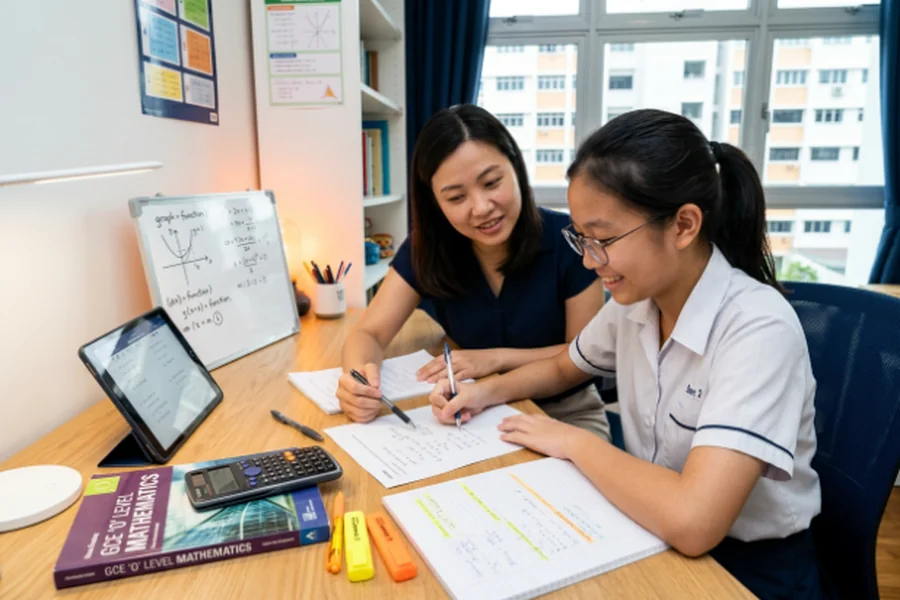
David’s son coasted through primary school maths. Nothing spectacular, but solid Bs. Teachers never raised concerns. Everything seemed fine.
Three months into Sec 1, the kid was barely passing. By June, he’d bombed two major tests. David sat me down at a coffee shop, completely baffled. “He’s studying more than ever,” David said. “So why’s he suddenly failing everything?”
I hear this exact story maybe twice a month. Students who handled primary maths reasonably well hit secondary level and just… crash. Parents think their kid got lazy. Nine times out of ten, that’s not what happened at all.
What Actually Changes in Secondary School
Most parents miss this. Secondary maths isn’t primary maths but tougher. It’s a completely different animal that needs different thinking.
Primary school teaches number sense and real-world problem solving. Kids work with stuff they can see and touch. Draw models. Use blocks. Everything connects to actual things. The whole approach builds slowly and logically.
Secondary school? Forget all that visual stuff. Now you’re dealing with pure abstraction. Letters representing unknown numbers. Graphs showing relationships that only exist on paper. Statistical concepts requiring interpretation rather than calculation. Students need to manipulate ideas that exist entirely in their heads.
This mental shift wrecks loads of kids who succeeded in primary through hard work and following patterns. What worked before? Suddenly useless.
Then there’s the speed. Primary school circles back to topics year after year. Plenty of time to let understanding sink in properly. Secondary races ahead. Two weeks on a topic, maybe three if you’re lucky. Then we’re moving on whether you got it or not.
And the tests get vicious. Primary assessments are pretty straightforward. You can usually tell what they want. Secondary exams deliberately hide what they’re asking for. Multi-step problems everywhere. Time pressure cranked up. You need speed and accuracy, not just one or the other.
Kids who got good primary grades through diligence rather than natural math intuition? This transition absolutely destroys them.
How to Tell If Your Kid’s Really Struggling
Some difficulty is normal. Everyone hits tough topics. But watch for these specific patterns.
Failing most tests consistently. One bad result happens to everyone. But regularly scoring under 50 across different topics? That’s a red flag waving frantically. They’re missing fundamental concepts they need to build on.
Homework becomes a nightmare. Not occasionally tough, but routinely taking two or three hours on work that should need maybe 45 minutes. They’re not slow. They’re stuck.
Can’t explain anything. Ask them to walk through their solution. If they can’t tell you why they did what they did, they don’t actually understand. Just copying memorized steps blindly.
Maths triggers meltdowns. When homework starts causing tears or full shutdown, emotional blocks have formed. These make learning basically impossible and usually get worse without help.
Old stuff still makes no sense. Sec 1 algebra confused them back in January? Still confused in August of Sec 2? Those foundation gaps will sabotage everything coming next. Problems like that multiply.
Bombs tests but does fine at home. Sometimes this is test anxiety. Often though? It means understanding is shallow. Breaks down the second you remove the notes and time to think.
These signs usually show up by middle of Sec 1. Sometimes earlier. The trick is catching them before your kid falls so far behind that catching up feels impossible.
Why School Can’t Always Fix This
Teachers work their butts off. Let’s be clear about that. But the system has built-in limitations affecting how much individual help students get.
Thirty-five to forty kids per class. Standard in Singapore secondary schools. One teacher handling that many students, trying to cover mountains of required content in limited time? Individual attention becomes nearly impossible. They teach to the middle. Everyone else gets less of what they actually need.
The syllabus is jam-packed. Teachers have to barrel through massive amounts of material preparing for O-Levels. Almost no flexibility exists for slowing down when students struggle or circling back to topics needing reinforcement. The train keeps moving regardless.
Plus different kids need different teaching styles. Visual learners need diagrams. Auditory learners need verbal explanations. Kinesthetic learners need hands-on practice. In a huge class with time pressure, teachers can’t possibly customize for everyone’s learning style.
And sometimes? The chemistry just doesn’t work. A perfectly good teacher explains things in ways that don’t land for certain students. Nobody’s fault. But it means those kids need to hear concepts explained differently.
These aren’t failures. They’re just realities of the system. For students who aren’t keeping pace, outside support often becomes necessary.
When Getting Help Actually Makes Sense
Not every struggling student needs tuition. Sometimes the fix is more practice, better study methods, or dealing with test nerves. But certain situations genuinely call for external support.
Missing chunks from earlier. Your child never properly understood key stuff from primary school or early secondary topics? Those holes keep causing new problems. School builds on assumed knowledge. Without foundations, new material is gibberish. Quality secondary Maths tuition in Singapore pinpoints these gaps and fills them methodically.
Big exams approaching. O-Levels coming up and understanding is seriously shaky? Time matters now. Focused exam prep plus content reinforcement can shift results that affect educational pathways.
Stuck on specific topics. Maybe how their teacher explains certain things just doesn’t click for your kid. Different teaching approach might make it all suddenly clear. Sometimes you just need to hear the same info framed another way.
Learning style completely mismatched. If your child’s brain processes information totally differently than how class presents it, they’ll struggle constantly. Support matching their actual learning style helps them access content properly.
Confidence completely shot. Sometimes students develop such bad associations with maths that anxiety shuts down learning entirely. Patient individual support rebuilds confidence alongside actual knowledge.
The real question isn’t “is my child struggling?” It’s “will current approaches fix this, or do we need something different?”
What Useless Tuition Looks Like
Singapore has tuition centres and private tutors everywhere. Loads of them provide basically zero real value despite charging serious money.
Watch for these warning signs:
Classes packed with bodies. Twenty-plus students in the tuition class? Your kid gets almost no individual attention. That’s just more school. Not customized support.
Carbon copy of school teaching. Tutor re-explains exactly what the school teacher covered using identical methods? Pointless. Students who didn’t get it the first time won’t magically understand from hearing it again the same way.
All about exam tricks. Some tuition teaches “shortcuts” and “hacks” without building real understanding. Might juice grades temporarily but creates knowledge so fragile it collapses with anything unfamiliar.
Zero diagnostic work. Starting tuition without figuring out exactly where understanding fell apart? That’s guessing in the dark. Good support starts with thorough diagnosis, not generic content review.
Communication like pulling teeth. Getting updates about progress requires constant pestering? Tutor probably isn’t paying close attention to individual development.
Guaranteeing results. No good tutor promises specific grade improvements. Too many factors affect outcomes. Be very suspicious of definite promises.
These might accidentally help students who just need more practice. For kids with actual conceptual confusion? Usually worthless.
What Actually Works
Good secondary maths support does specific things casual tutoring misses completely.
Diagnose properly first. Before teaching anything, identify exactly where understanding broke. Which specific concepts are murky? What foundation skills are weak? What wrong ideas exist? This takes time but you can’t fix problems you haven’t identified.
Match pace to the student. Go as fast or slow as each kid needs. Camp out on challenging concepts. Zoom through stuff they grasp easily. This flexibility is impossible in classrooms but crucial for actual learning.
Try different explanations. Explain concepts multiple ways until finding what works for that specific brain. Visual demos, verbal walkthroughs, real examples, symbolic representation. Different kids need different approaches.
Build real understanding. Make sure students get why methods work, not just how to execute them. Creates flexible knowledge that handles unfamiliar problems instead of rigid procedures that only work on familiar stuff.
Teach exam skills too. Not just content but also exam technique, time management, interpreting questions, managing stress. These matter enormously for actual test performance.
Monitor constantly. Track improvement continuously. Adjust teaching based on what’s working. If something isn’t helping after reasonable time, try different approaches.
Connect the dots between topics. Help students see relationships between different maths areas. Secondary maths builds heavily on connections. Kids who only see isolated topics can’t apply knowledge flexibly.
This level of customization needs either one-on-one or tiny groups with really experienced tutors. Costs more than giant classes but actually addresses root problems preventing improvement.
Choosing Smart
Decided your kid needs outside help? Choose carefully. Think about these things.
What’s the actual problem? Foundation gaps need different support than test anxiety. Visual learners need different teaching than auditory learners. Match support type to the real issue.
Tutor’s approach and expertise. Don’t just check certificates. Ask about teaching philosophy, how they figure out what’s wrong, what methods they use for different learner types. Answers reveal whether they customize or just teach generic content.
Real-world logistics. Location, schedule flexibility, cost you can sustain. Support only works if your child actually goes consistently. Choose options that work practically for your family long-term.
Try before buying. Most decent tutors offer trials or assessments. Use these to check both teaching quality and your kid’s response. Don’t lock into long contracts without testing fit first.
Stay in the loop. Set clear expectations about updates. You should get regular info about what’s covered, how your child’s responding, where problems remain. Active parent-tutor communication improves results.
Be patient but watchful. Expect gradual improvement over months, not magic transformation in weeks. Real understanding builds slowly. But also monitor that progress is actually happening.
Tuition supplements your child’s effort, doesn’t replace it. Even brilliant tutoring can’t help kids who don’t do work or actively resist. Success needs student engagement plus quality instruction.
More Than Just Numbers on Tests
Sure, better maths grades matter for academic options and future paths. But quality support gives benefits beyond test scores.
Learning to solve problems. Tackling unfamiliar stuff systematically, breaking big challenges into chunks, pushing through when things get hard. These skills work everywhere in life.
Getting tougher mentally. Experiencing real struggle followed by eventual success builds confidence and grit. Students learn difficulty doesn’t equal impossible.
Understanding how they learn. Good tutors help students figure out how their own brain works best, what strategies fit them, when they need help. This awareness serves students forever.
Fixing the relationship with maths. For kids who’ve developed anxiety or hatred toward maths, supportive teaching can repair that. Even if they don’t love it, they can reach acceptance and capability.
These long-term gains often matter more than short-term grade bumps, though both have value.
What to Do Now
Your kid’s struggling with secondary maths? Don’t panic but also don’t ignore warning signs hoping they magically fix themselves. They usually don’t.
First, honestly figure out where problems actually are. Foundation gaps? Learning style mismatch? Test nerves? Weak study skills? Different issues need different fixes.
Talk to school teachers. They see your child daily and can give valuable insight into specific struggles and whether outside help makes sense.
If you decide external help is needed, research properly. Talk to other parents, check reviews, interview potential tutors about their methods. Choose based on fit for your kid’s needs, not just reputation or price.
Watch progress once support starts. Gradual improvement should happen. Not seeing gains after a full term? Something’s not working. Don’t keep paying for ineffective support hoping it’ll eventually click.
Keep perspective. Secondary maths struggles don’t define your child or their future. With proper support and their own effort, most students can reach decent competence even if they’ll never be maths geniuses. That’s totally fine.
The goal isn’t perfection. It’s giving your child tools and understanding they need to handle maths requirements in whatever path they choose. Quality support makes that achievable for most students willing to actually engage.